Mineral
Iron ore
Iron ore → Iron bloom → Wrought iron → Axe
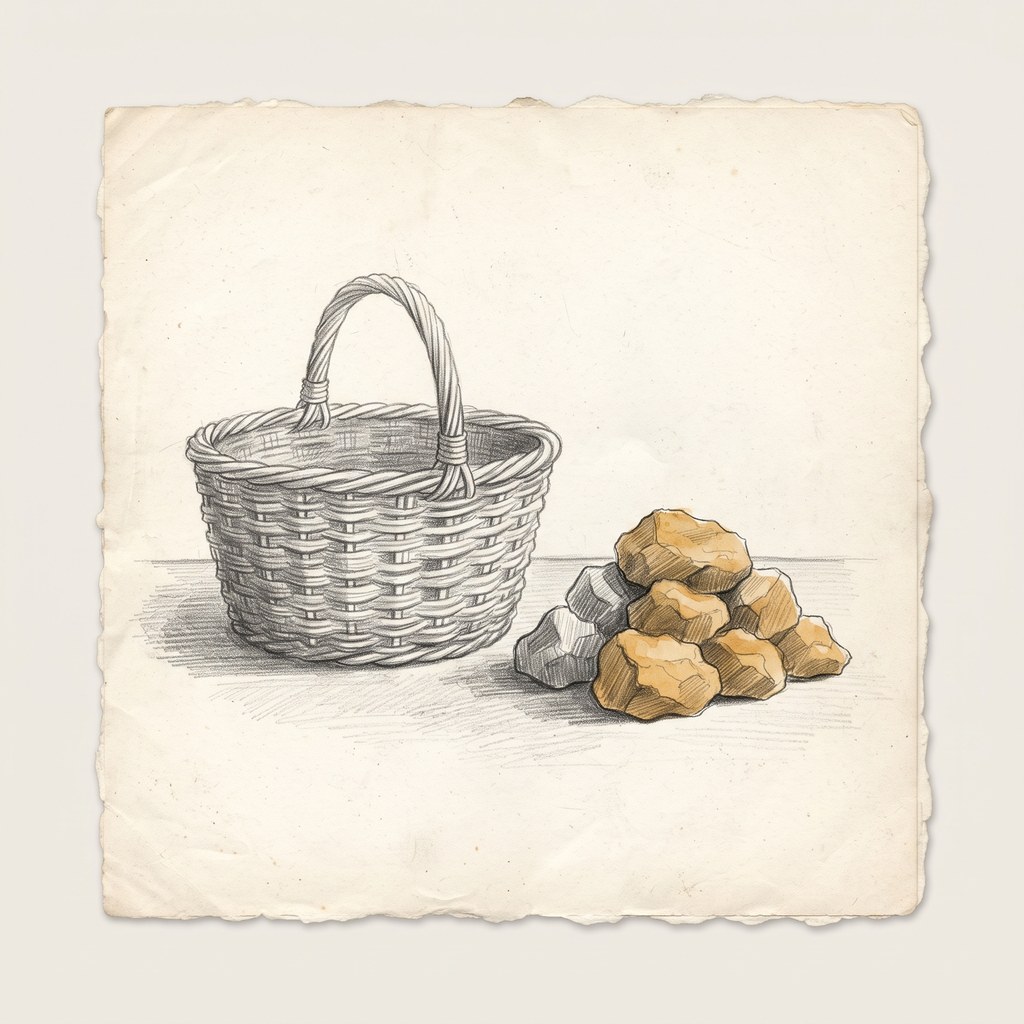
Rock or earth rich in iron, dug from shallow pits and outcrops. In twelfth-century England the main iron-working districts were the Weald, the Forest of Dean and Northamptonshire. Ore was usually roasted and broken small, then smelted with charcoal in a bloomery furnace, which produced a spongy lump of iron and slag called a bloom. Smiths then hammered the bloom into bars and finished goods. Water-powered ironworking came later, around the fourteenth century.
Caveats (confidence: high)
Smaller local ore sources (e.g. bog ore) existed but were not checked for this period.
Sources: historicengland.org.uk · british-history.ac.uk
Made by
- Dig ore
Used to make
- Smelt a bloom
- Dress iron ore by hand
- Dress iron ore at the stamps